
Cleopatra had her milk baths. The Romans built cities around theirs. Somewhere between then and now, yours became a five-minute shower with one eye on the clock.
Scented bath salts are one of the genuinely good small luxuries — cheap, repeatable, and effective at making an ordinary evening feel deliberate. But there is one piece of chemistry behind essential-oil bath products that almost nobody explains at the point of sale, and it is the difference between a lovely soak and stinging skin.
A note on how we work: we have not used this particular set. What follows is based on its stated contents and on established guidance about using essential oils in the bath.
The Thing Nobody Tells You: Essential Oils Don’t Mix With Water
This is the single most useful thing to know before buying any scented bath product, and it applies well beyond this one.
Essential oils are not water-soluble. Added to a bath without something to disperse them, they do not dilute — they float on the surface as concentrated droplets. Then you get in, and those undiluted droplets make direct contact with your skin. Warmed by the water and unable to evaporate, they can cause stinging, redness, irritation and, in the wrong circumstances, chemical burns.
And here is the part specific to bath salts: salt alone is not a dispersant. Salt dissolves in water; oil does not, and salt does not make it. For a salt-and-oil product to be safe, the oils need to have been blended into a carrier — a vegetable oil, a solubiliser like polysorbate 20, or a similar dispersing agent — before being combined with the salt. Well-made products do this. Cheap ones spray neat oil onto salt and call it done.
So the question worth asking of any bath salt — including this one — is whether a carrier or dispersant appears anywhere in the ingredients. If the label reads only “sea salt, essential oil,” that is worth knowing before you use a generous handful.
How to Use Them Safely
- Do a small test first. Use a modest amount for your first bath rather than the generous handful the packaging suggests, and see how your skin responds.
- If you feel stinging, get out and rinse. That is undispersed oil on skin, not the salts “working.”
- You can improve almost any salt yourself: stir your portion into a tablespoon of a carrier oil — jojoba, fractionated coconut, even olive — before it goes in the water. Note that full-fat milk is not a reliable dispersant, despite being widely recommended.
- Keep the water comfortably warm rather than hot. Above roughly 40°C both irritation risk and skin drying increase.
- Moisturise afterwards. Salt baths are mildly drying, which is the opposite of what people expect. If you have eczema or already dry skin, that matters.
- Not on broken or freshly shaved skin. Salt plus essential oil on a fresh nick is memorable for the wrong reasons.
Who Should Avoid Which Jar
The three oils in this set are not equivalent, and the eucalyptus one in particular deserves a caveat.
Eucalyptus — avoid during pregnancy and breastfeeding. Eucalyptus is high in 1,8-cineole, safety during pregnancy and lactation has not been established, and there is evidence the compound can cross the placenta. Standard guidance is not to use it in these periods. It is also the most likely of the three to irritate sensitive skin, and it should be kept away from young children entirely — not just avoided in their bath, but not used in a bathroom they are about to use.
Lavender and rose are the gentler two, and lavender is the one generally considered most suitable if you are pregnant — though pregnancy guidance on essential oils is genuinely cautious across the board, and skin is often more reactive during pregnancy. If you are expecting, ask your midwife rather than relying on a product page.
Also worth checking with a doctor first if you have eczema or psoriasis, a history of skin sensitisation to fragrance, asthma that is triggered by strong scents, or you are bathing a child.
What the Salts Genuinely Do (And Don’t)
Real: a warm bath before bed genuinely helps sleep — the mechanism is the drop in core body temperature afterwards, which is a well-documented sleep cue. Lavender scent has modest but real evidence for reducing subjective anxiety. Warm water eases muscle tension. Salt makes water feel softer and adds a pleasant texture.
Not real: bath salts do not detoxify anything — that language appears constantly in this category and means nothing. Minerals do not meaningfully absorb through intact skin in a twenty-minute soak, so “mineral-rich” is a texture and marketing claim rather than a nutritional one. And rose oil does not tone skin in any measurable way; it smells lovely, which is a perfectly good reason to buy it.
Stripped of the overclaiming, what is left is still genuinely worth having: a warm, good-smelling twenty minutes that reliably helps you sleep. That is a real effect with a real mechanism. It does not need to detoxify anything to earn its place.
Three Jars, Three Moods
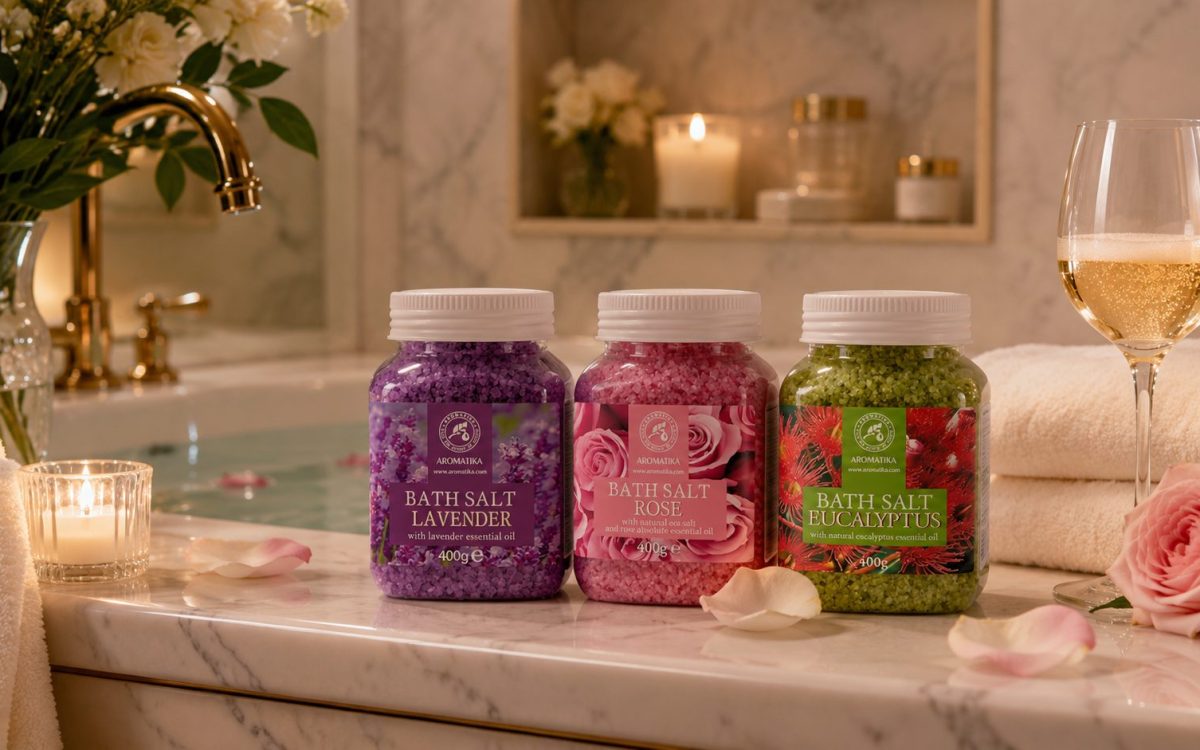
Three 400g jars of sea salt with essential oils rather than synthetic fragrance, which is the meaningful distinction in this category and the main thing you are paying for.
Lavender for the nights your mind will not stop — the best choice of the three for an hour before bed. Rose for when you want the evening to feel like something. Eucalyptus for after the long run or the long flight, with the caveats above.
Who It’s For
Buy it if you have a bath you underuse, you want a low-cost evening ritual, and you prefer essential oils to synthetic fragrance. As a gift it works well, since three jars let someone choose by mood.
Skip it if you have reactive or eczema-prone skin, you are pregnant and unsure which oils are appropriate, or you were buying it for detox or mineral benefits — those are not what you would be getting.
Rest is not a reward you earn by finishing everything. It is just worth knowing how to run the bath properly.
Prices and availability are accurate as of the date of publication and are subject to change. Please check the product page on Amazon for current pricing and other details.
This article is for general information and is not medical advice. If you are pregnant or breastfeeding, have a skin condition, or are using essential oils around children, speak to your doctor, midwife or pharmacist before use.
The candle that belongs on the edge of this bathtub is in our list of luxury finds under $50.
Written by Milica Jovanović, founder of Feel Like A Goddess. I hunt down beautiful, well-made things that make everyday life feel a little more extraordinary, and I only recommend what I genuinely believe in.