
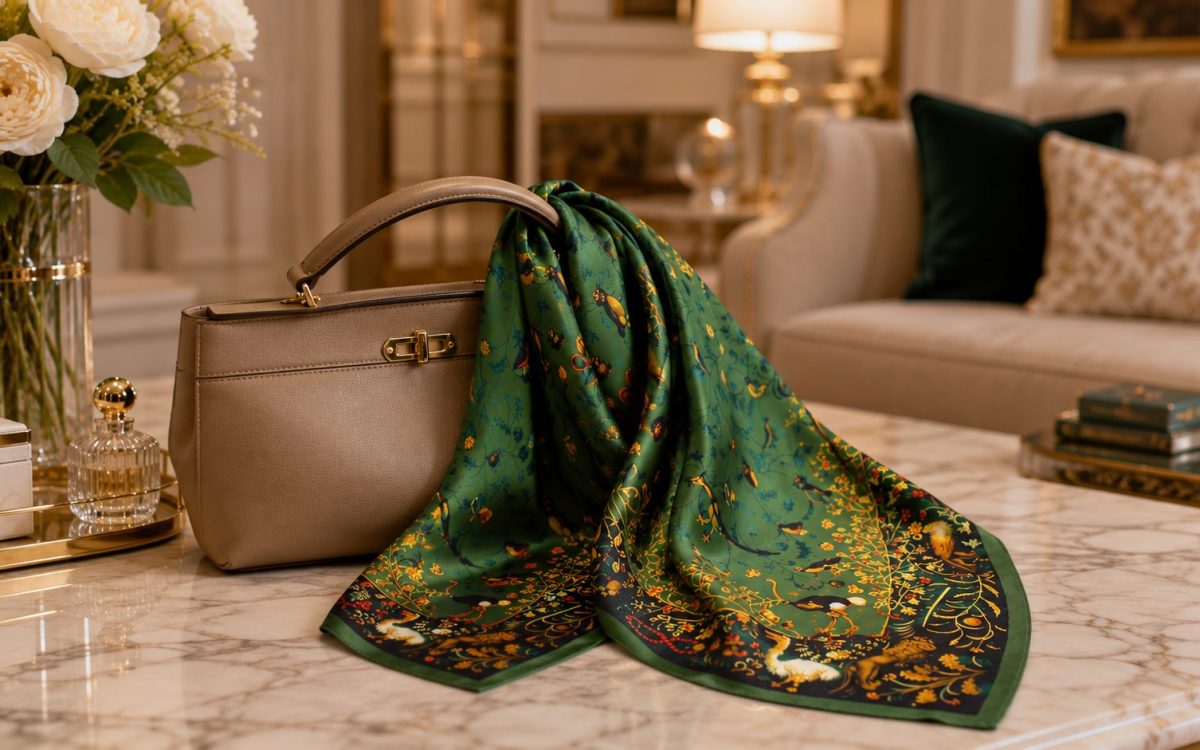
A silk square is one of the genuinely good small purchases — it costs little, it lasts years if you treat it properly, and it does more work than almost anything else at the price.
But two things about silk scarves are consistently misrepresented, including in the original version of this review: what “SGS verified” actually tells you, and what a 25.6-inch square can realistically do. Both are worth getting right before you buy.
A note on how we work: we have not handled this particular scarf. What follows is based on its stated specifications and on how silk scarves are made and graded generally.
What “SGS Verified” Does and Doesn’t Mean
SGS is a large independent testing and inspection company. An SGS test report means a sample was sent to a lab and confirmed to be the fibre claimed.
That is worth something real. Polyester passed off as silk is rampant in this category, and a lab report is better evidence than a product description. So take the report seriously: this almost certainly is silk rather than a convincing impression of it.
What it is not is an ongoing certification. It is a point-in-time test on a sample, not a continuous audit of every batch, and — importantly — it says nothing about the quality of the silk. It confirms fibre type. It does not confirm weight, grade, weave or durability. Two scarves can both be genuinely 100% mulberry silk and be very different products.
The Number That Actually Tells You the Quality
For silk, that number is momme — a measure of fabric weight and density, and the silk equivalent of thread count. It is not stated on this listing, which is normal for scarves and mildly annoying.
You can infer it, though. The scarf is described as weighing under an ounce at 25.6 inches square, which works out to roughly the mid-teens in momme. That is squarely in the standard, appropriate range for a scarf, so this is reassuring rather than alarming.
Useful context for anything you buy in future:
- 12–16 momme is the standard scarf range. Light enough to drape, knot and float, which is exactly what a scarf needs.
- 16–19 momme has more structure — better if you mainly want headbands, hair ties or bag wraps, where the fabric needs to hold shape.
- Below about 12 momme is where scarves start snagging easily and wearing out with repeated washing.
- Higher is not better here. A 25-momme scarf would be stiff and hang badly. Unlike pillowcases, where heavier genuinely means better, scarves want to be light.
And a general rule worth carrying with you: if something claims to be silk and gives no momme weight anywhere, that is a reason to look more closely, not less.
What 25.6 Inches Can Actually Do
We previously said this square was large enough to wrap your hair completely. That was wrong, and it is the kind of thing you would only discover after paying.
At 25.6 inches (about 65cm) this is a mid-size square. The classic large scarf — the one in the photographs you are picturing, the one that works as a full head wrap, a halter top or a light shawl — is around 35 inches, and the difference in usable fabric is substantial.
What 65cm genuinely does well:
- Knotted at the neck over a plain shirt — its strongest use, and the one that does the most for an outfit.
- Tied around a ponytail or bun.
- Folded into a headband.
- Wrapped around a bag handle.
- A neckerchief or wrist wrap.
What it will not do: a full head wrap over long or thick hair, a top, a shawl, or a proper overnight hair covering. If protecting your hair while you sleep is the main reason you are buying, a silk bonnet or a 35-inch square will serve you far better — this one will slide off in the night.
So “a dozen ways to wear it” is fair, provided the dozen are neck, hair and bag. It is a versatile accessory, not a versatile garment.
4 Ways to Tie It (That Actually Work at This Size)
A 65cm square is small enough that the fussy, fabric-hungry knots you see in tutorials will not work, but these four do. Each one takes under a minute, and a tighter double knot keeps everything in place since silk loves to slip.
1. The Classic Neck Knot
Lay the square flat and fold it corner to corner into a triangle, then keep folding the long edge over on itself until you have a band a couple of inches wide. Drape it around the back of your neck with the ends in front, cross one end over the other, tuck it under and pull snug, and settle the small knot slightly off-centre. This is the one that turns a plain white shirt into an outfit, and it is the use this scarf does best.
2. The Ponytail Wrap
Fold the scarf into the same narrow band. Tie your hair back first, then wrap the band around the base of the ponytail, hiding your elastic, and finish with a small double knot or a little bow on top. Let the tails hang loose so they move when you do. It dresses up the most basic hairstyle in about thirty seconds and photographs beautifully.
3. The Folded Headband
Fold to a band again, but a little wider this time. Lay it under your hair at the nape of your neck, bring both ends up to the top of your head, and tie a double knot where you want it, either centred for a retro look or off to one side. Tuck the tail ends under so only the band shows. This keeps hair off your face on a grow-out day and looks intentional rather than lazy.
4. The Bag Handle Tie
This one uses the scarf open rather than folded. Loop the square once around the base of your bag handle, tie a single loose knot, and let the ends trail down. It instantly lifts a plain tote or a work bag and, conveniently, keeps the scarf on you and ready whenever you want to move it to your neck or hair. When you are not wearing silk, this is the prettiest place to store it.
One habit worth keeping: because silk slides, a single knot will quietly loosen over a few hours. A double knot, or a small scarf ring, saves you re-tying it all day.
Caring for It So It Survives
Real silk is genuinely durable if handled correctly and ruined quickly if not:
- Perfume, hairspray and deodorant are the main killers. Alcohol degrades silk fibres and leaves permanent marks. Scent goes on first, scarf second — and let it dry.
- Hand wash cool with a pH-neutral or silk detergent. No bleach, no biological powder — enzymes in biological detergents digest protein fibres, and silk is a protein fibre.
- Never wring it. Press the water out between a towel.
- Dry away from direct sunlight, which fades dye and weakens the fibre.
- Iron on the lowest setting, damp, through a cloth, or steam it. Silk scorches instantly and there is no recovering it.
- Sweat causes yellowing over time, particularly on pale colours — so wash it after wearing it in heat rather than putting it straight away.
One practical note: silk is slippery. A single loose knot will work its way undone during the day. A tighter double knot or a small scarf ring solves it.
Who It’s For
Buy it if you want a neck and hair accessory in genuine silk at a low price, you like the print range, and you are happy hand-washing it occasionally. As a gift it is close to foolproof.
Skip it if you wanted something large enough to wrap your head or wear as a shawl — buy a 35-inch square instead — or if you are buying primarily for overnight hair protection, where a bonnet does the job properly.
Luxury really can be a whisper. It just helps to know how big the whisper is before it arrives.
Prices and availability are accurate as of the date of publication and are subject to change. Please check the product page on Amazon for current pricing and other details.
More small things that change everything in our list of luxury finds under $50.
Written by Milica Jovanović, founder of Feel Like A Goddess. I hunt down beautiful, well-made things that make everyday life feel a little more extraordinary, and I only recommend what I genuinely believe in.